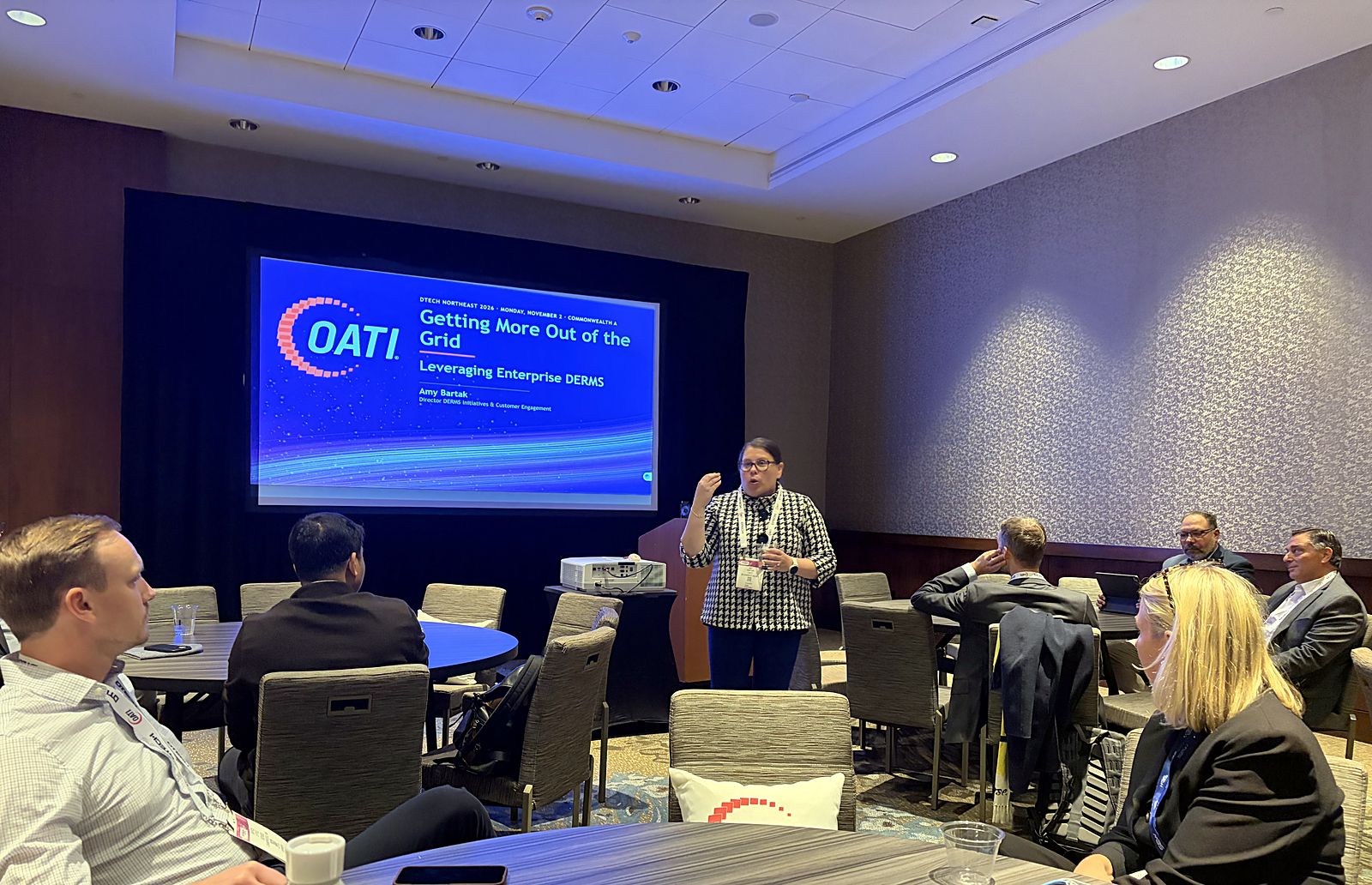
By Amy Bartak, Director, DERMS Initiatives & Customer Engagement, OATI
Three days in Boston with Northeast utilities kept coming back to one question: how to hold rates steady while the grid grows. Here is what we heard.
OATI was the presenting sponsor of DTECH Northeast 2026 in Boston, November 2-4. Between our DERMS workshop, the welcome remarks, an AI working session, a briefing for energy industry consultants and the Crossing the Chasm panel, we spent three days with the people planning the Northeast grid. Reliability, resiliency and affordability came up in every session and every keynote. What stood out this year was how tightly the three are now tied together.
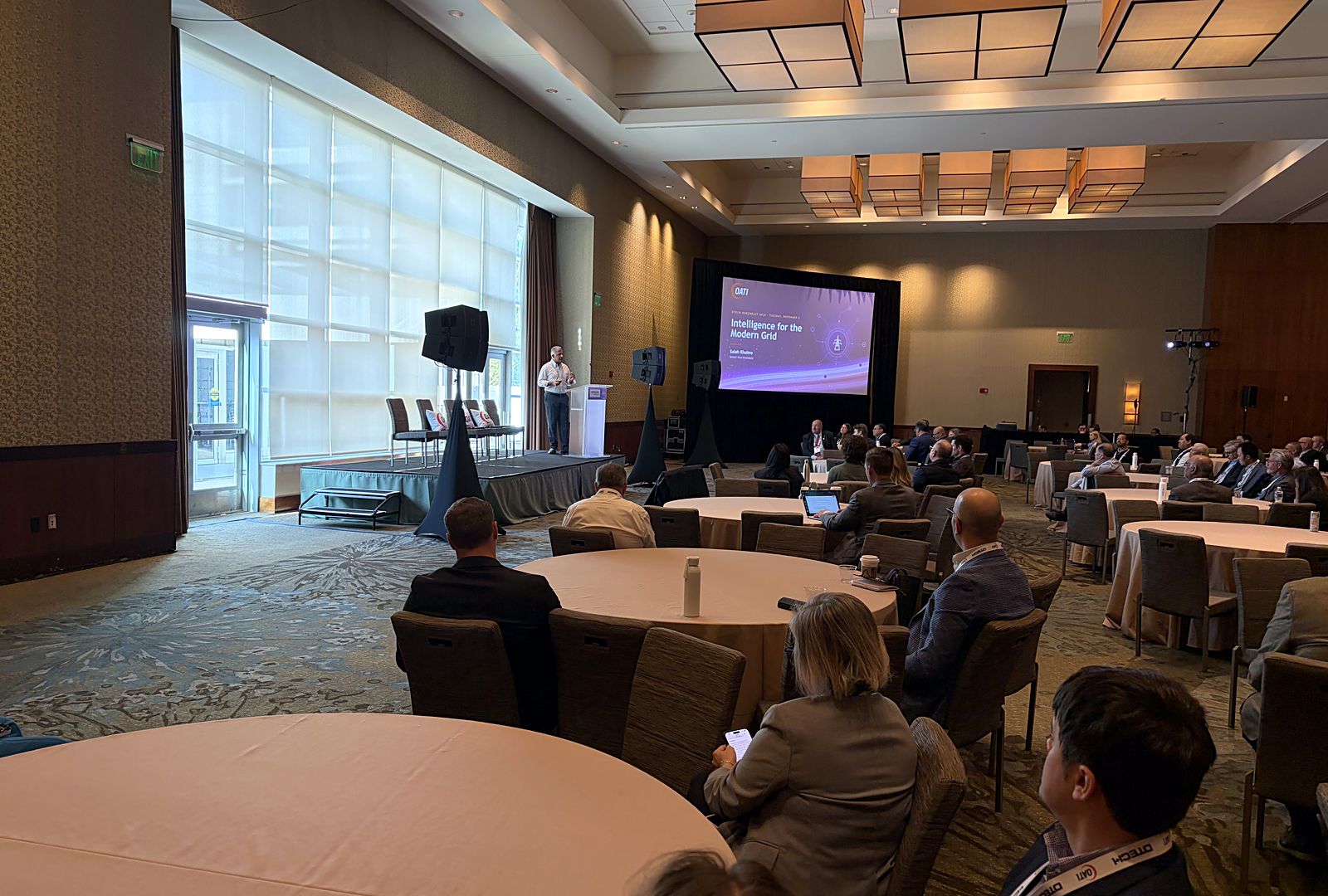
Four challenges on the table
Our welcome remarks opened Tuesday on four challenges Northeast utilities are planning for now:
A peak that is moving to winter
ISO New England’s 2026 CELT forecast has the New England winter peak growing from 20.5 GW in winter 2026/27 to 26.4 GW in winter 2035/36 at normal weather, with electric heating the largest driver.
Solar that peaks in the wrong season
At this latitude solar is mainly a summer resource, with little output on the winter evenings when the new peak arrives.
Shorter windows for planned work
Two peak seasons leave shorter shoulder seasons for planned transmission and generation outages.
Capacity on the lines already built
Static ratings assume a hot, still, sunny day. Cold, windy winter hours are when a line can safely carry the most, which is when a winter-peaking system needs it.
20.5 GW
New England winter peak forecast, winter 2026/27
26.4 GW
New England winter peak forecast, winter 2035/36
Source: ISO New England 2026 CELT forecast, normal weather.
The conversations that followed, in the sessions and in the hallway, were about what utilities are doing about each one.
Affordability and investment are the same conversation
Regulators, utilities and customers in the region all put affordability first. In the same breath, they made the point that affordability takes investment: a grid that cannot serve new load, or that keeps new supply waiting for years, is not cheap for anyone. One public power leader put the goal as stable rates, not cheap rates, with public trust right beside it.
That is a useful test for any grid investment. The question is not only what it costs, but whether it holds rates steady as demand grows. Flexibility passes that test because it gets more out of capacity a utility has already paid for, which is the argument behind the four near-term strategies in our load growth white paper.
Flexible interconnection is where the DERMS case is being made
The Northeast is short on generation and long on queue time. Utilities are turning to flexible interconnection to bring resources on faster and at lower cost: a resource connects now, on the condition that its output can be managed during the hours the local grid is constrained, instead of waiting for upgrades sized to the worst hour of the year.
Regulators are writing the same idea into their interconnection rules. In Connecticut, the Public Utilities Regulatory Authority’s November 4 final decision in its investigation into interconnection process modifications (Docket No. 25-01-27) establishes a flexible interconnection framework for distributed energy resources. Scheduled flexible interconnection, with export limits set in advance from expected conditions, is to be available across the service territories of the state’s electric distribution companies by May 1, 2027. Dynamic flexible interconnection, which adjusts exports to real-time grid conditions, phases in from 2028 and calls for more sophisticated monitoring and control, such as a grid-scale DERMS or an ADMS.
May 1, 2027
Scheduled flexible interconnection available across the service territories
May 1, 2028
Dynamic flexible interconnection begins at the most constrained substations
Nov 1, 2030
Dynamic flexible interconnection systemwide
Source: Connecticut PURA final decision, Docket No. 25-01-27, November 4, 2026, as reported by Harris Beach Murtha.
In New Jersey, regulators have asked the state’s electric utilities about common approaches to interconnection screening and hosting capacity.
That changes where the case for DERMS is made. It used to rest mostly on DER and behavioral demand response programs. Now it rests just as much on hosting capacity and time in queue, because a flexible connection is only as good as the system that can see the resource and manage it in real time. That is the job of a DERMS, and it is why more than 250 utilities run their DERMS on OATI.
Planning for the electrification peak
Electrification is the scenario planners watch most closely. One utility said full electrification would push its peak to about five times today’s, on a system that can carry two to three times. Another expects its summer peak to double or triple. And everyone remembers February 2023, when arctic air drove record lows across New England and showed what a winter super peak could look like.
None of that load arrives on one date. It arrives a heat pump, an EV charger and a rooftop array at a time, which is why visibility and control at the grid edge have to be in place before the peak, not after it.
Sequencing so every customer can take part
A large utility described finishing its AMI rollout, in 2027, before its next DERMS step, so that every program it launches can reach every customer in its territory. It is a sound order of operations. AMI supplies the data. A DERMS turns that data into programs open to the whole service territory, not only to the neighborhoods that happened to get advanced meters first.
At the DERMS workshop
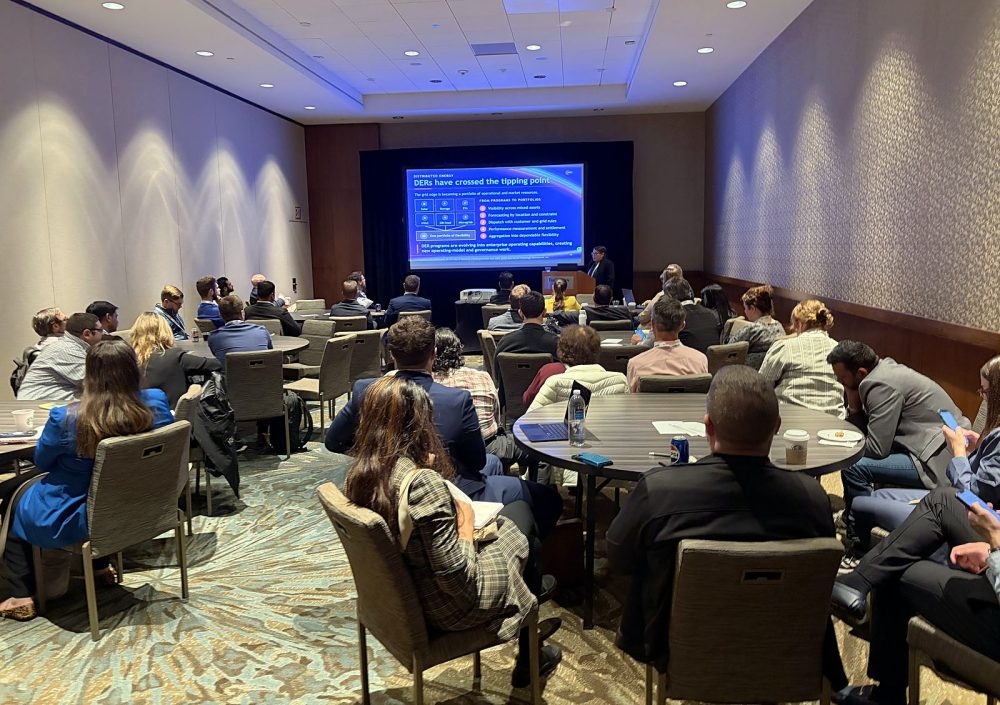
We opened the week on Monday with a packed open roundtable on making DERMS work at scale: improving grid visibility, coordinating distributed assets, managing new constraints and turning flexibility into a dependable grid resource as electrification drives winter demand higher.
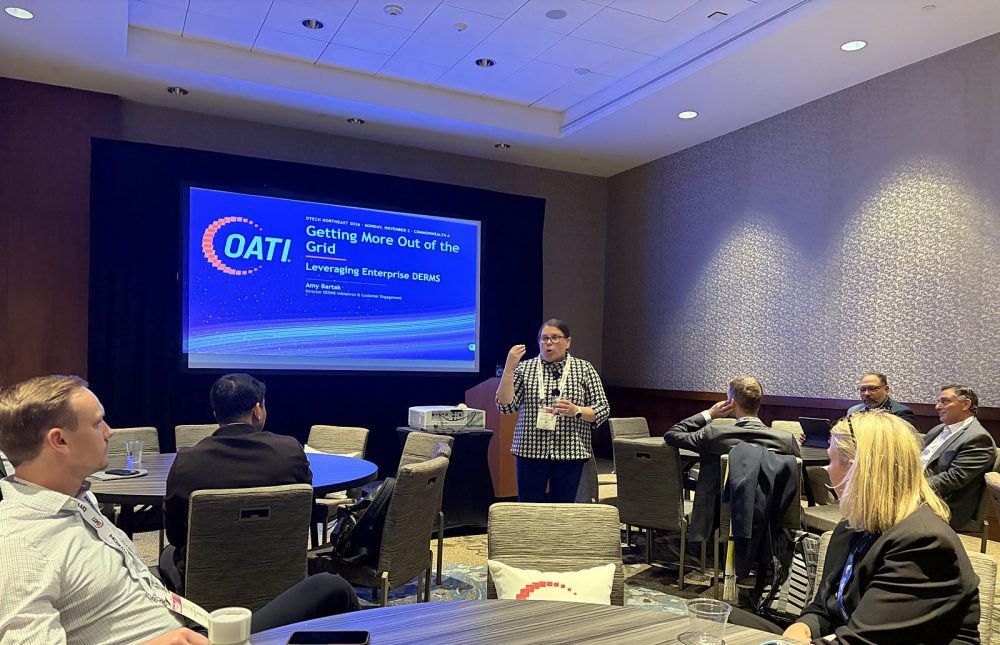
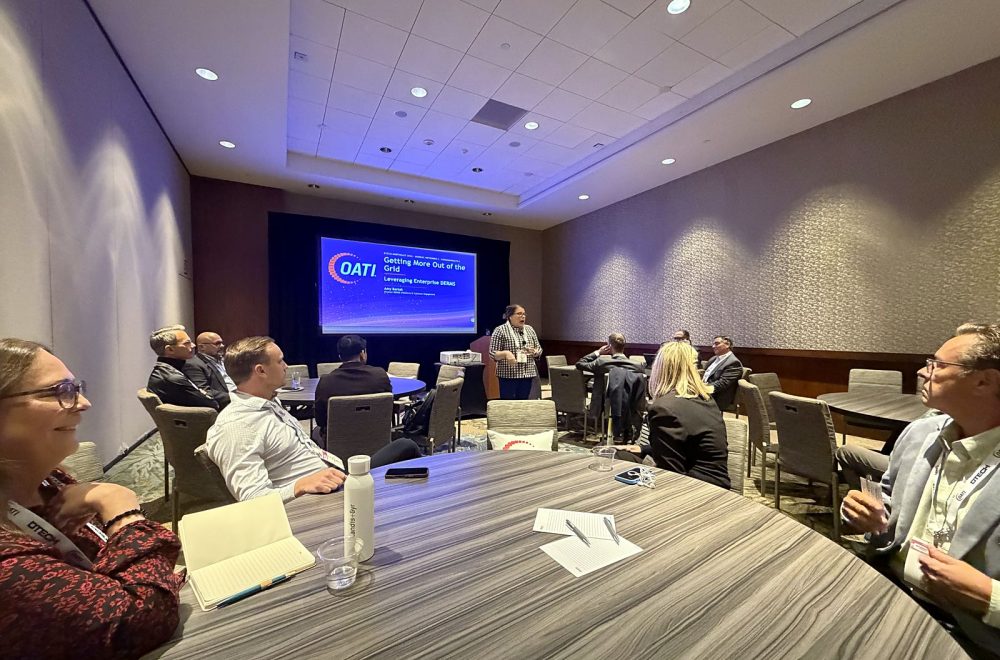
Every utility at the table sees the value in DERMS. The harder part is bringing DERs into operations for more than peak shaving. The approach that builds operator trust runs in three steps. Crawl: start with DER forecasting and visibility. Walk: widen the pilots that dispatch and control DERs, so more of the organization sees the benefit and learns where new business processes are needed. Run: bring flexibility into everyday operations.
Affordability was on everyone’s mind. Customer education goes beyond the bill. Utilities want help explaining why programs like EV managed charging, smart thermostats and time-of-use rates matter, how easy they are to join, and that they are open to commercial and industrial customers as well as households.
Data governance came up at the workshop and stayed with us through the week, especially in the AI sessions. How far can you trust the data? How often does it need to be refreshed or synchronized? Is real time necessary, or are 5- or 15-minute intervals enough? Those answers differ by utility, and they belong in the plan from the first step of a DERMS deployment.
A question we heard there and through the week: how do you future-proof technology you build now, when the grid it serves will look very different in 5, 10 or even 20 years? Our answer is a platform that grows with the program, from getting DERs under control to an enterprise DERMS that runs every program on one system. Each step is mapped in the DERMS journey.
AI has to be defensible
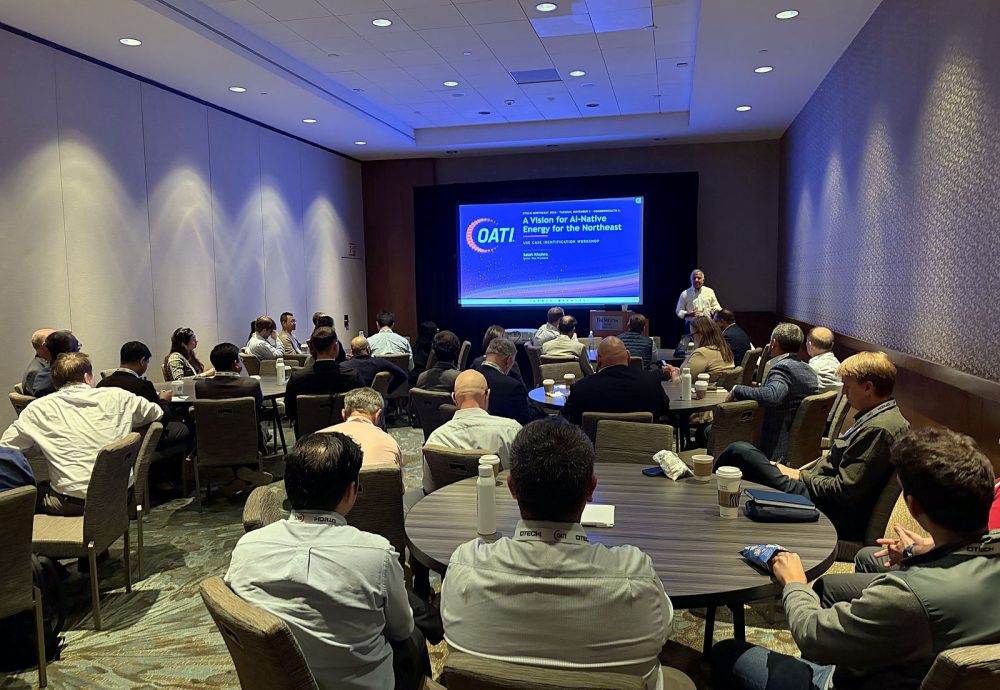
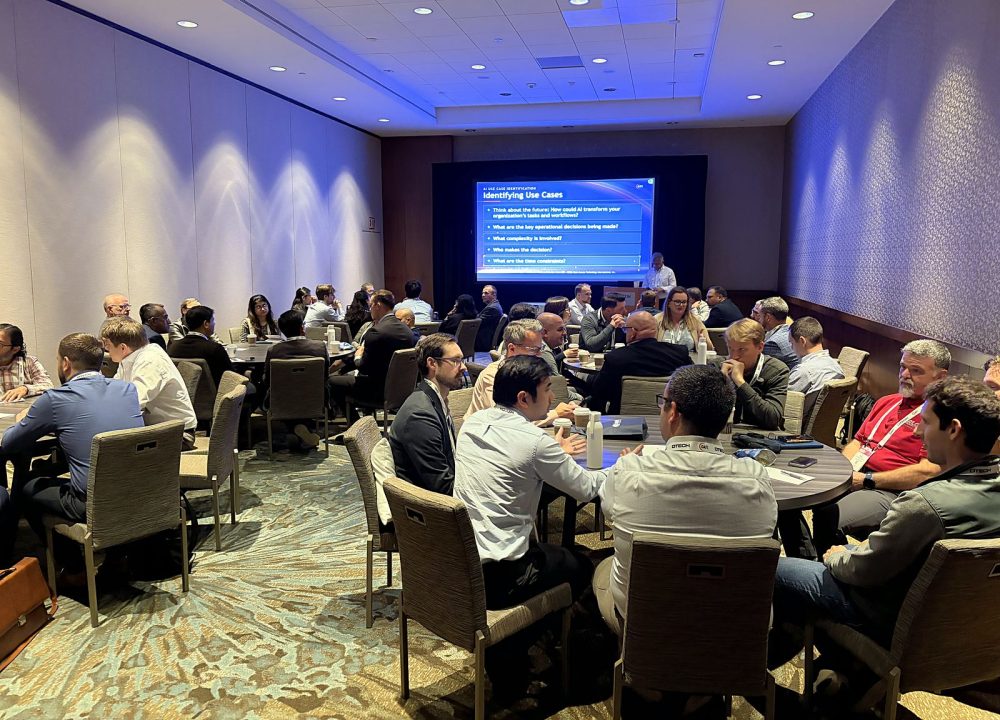
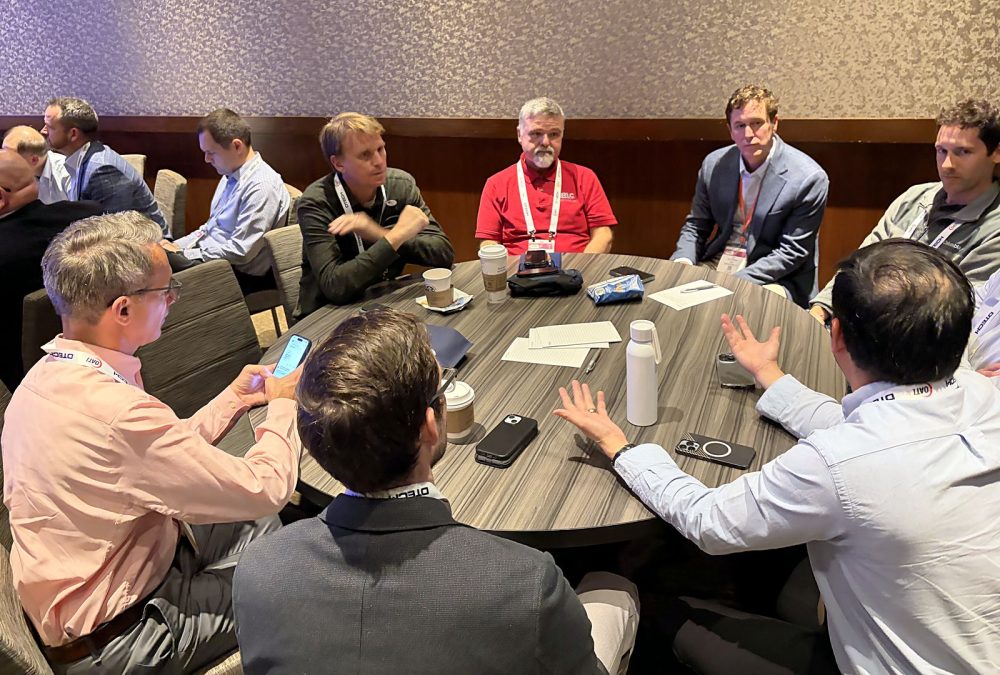
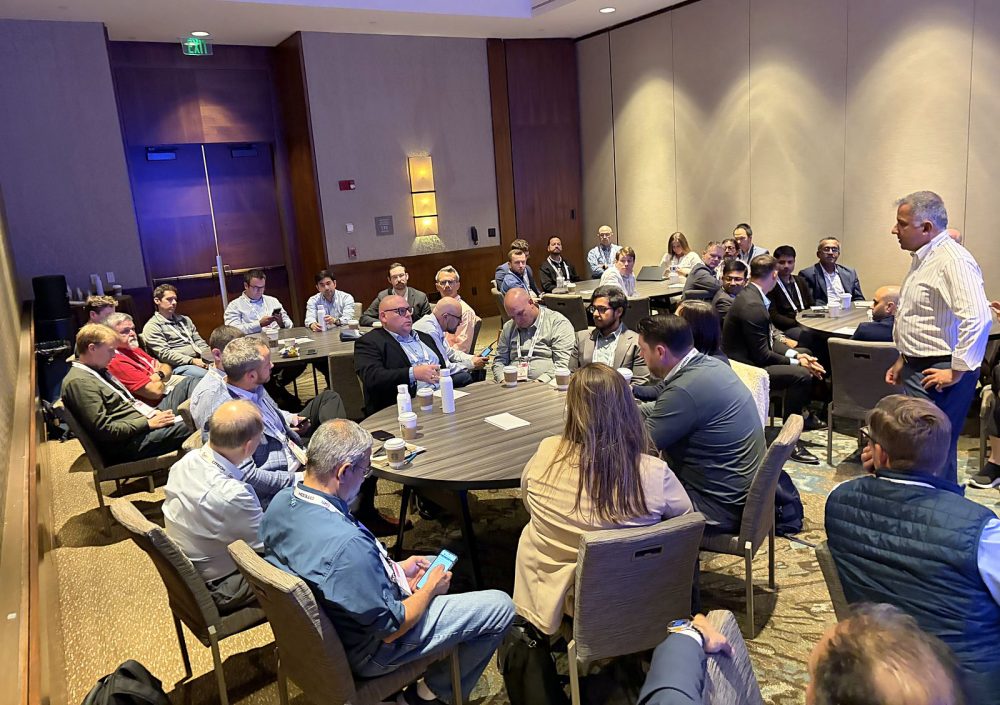
The same standard ran through every AI conversation. At A Vision for AI-Native Energy for the Northeast, each table worked through where its own first AI use cases are, weighing the decisions involved, how complex they are, who makes them and how much time there is to make them. The use cases the tables named were close to home: everyday data work that still takes too much manual effort, programs that could run better, and helping newer staff come up to speed faster. The feedback was strong, and one utility left wanting to run the same kind of working session across its own departments. That is the right instinct: the use cases worth doing first are inside a utility’s own operations, and the people who run them are the ones who can name them.
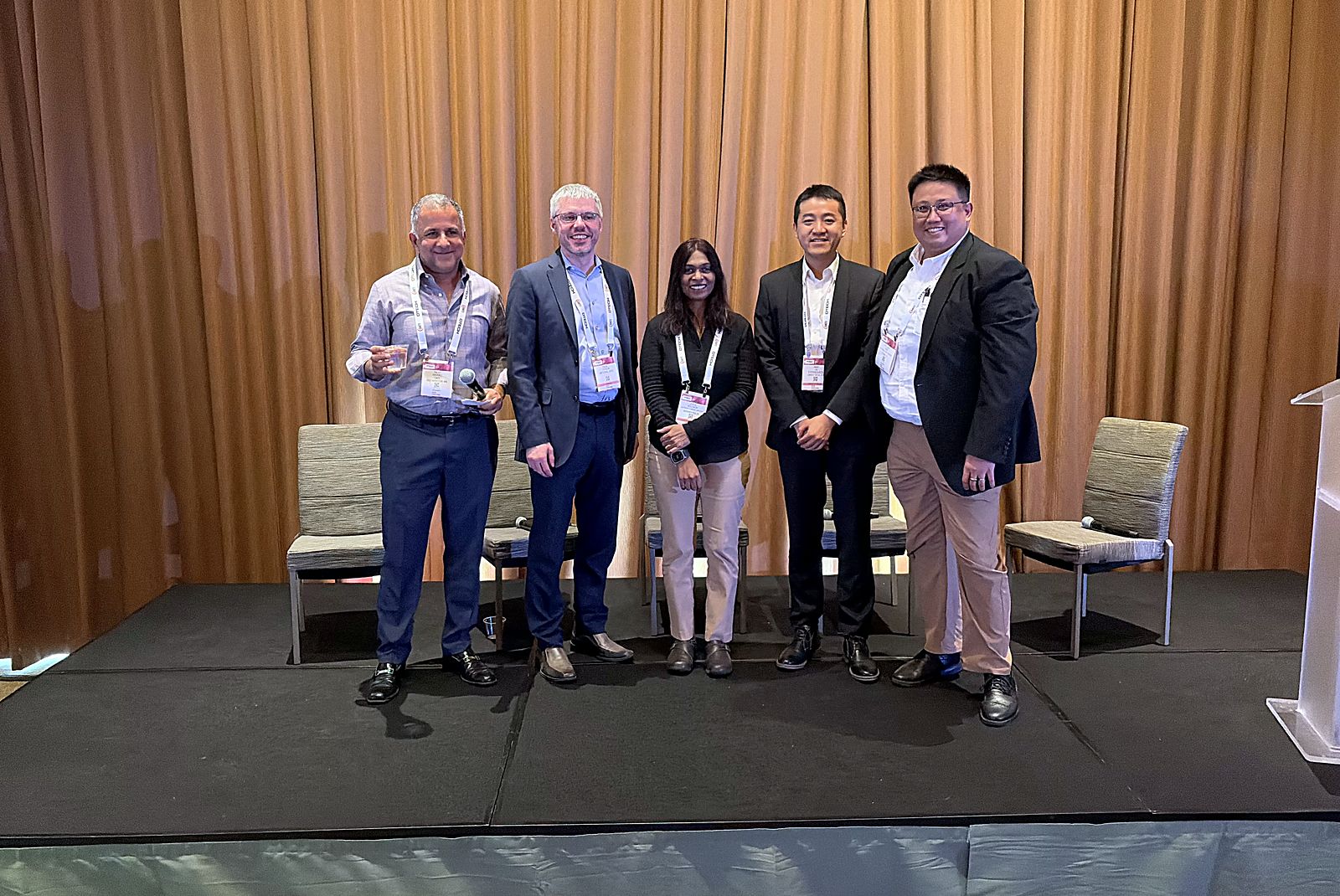
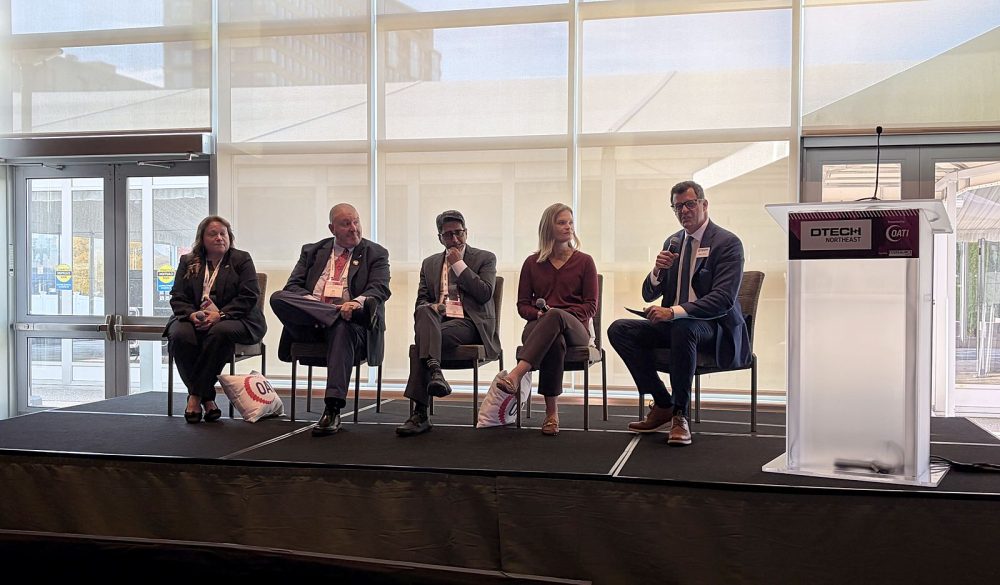
At Wednesday’s Crossing the Chasm panel, Salah Khuhro and his fellow panelists took up the next step: moving AI from pilot programs into everyday utility operations.
One utility put the bar plainly. In-house analytics are easier to defend before a regulator, and it does not yet trust AI to forecast. That is a fair standard. AI a utility can put into operations has to give answers it can explain and defend, from its own data, with its own people making the final call.
That is how we build OATI AI Genie™, on top of the OATI systems utilities already run. OATI does not train AI Genie™ on customer data unless a model is developed only for your use case. At California ISO, where AI Genie™ is live in the production outage management system, California ISO personnel retain final authority over outage approvals and every consequential grid decision. Our AI in the control room white paper goes further into what that looks like in a control room.
What comes next
The week came back to one idea. The Northeast cannot build its way to a winter peak on schedule, and its customers cannot afford for it to try. Much of the capacity the next decade needs is already on the system: in the lines, in customer devices, and in the data utilities already collect. Putting it to work is a coordination problem, and the tools to solve it are in service today.
See how utilities are doing it in our DERMS case studies.