Maximizing grid-scale utility battery storage
Centralized, real-time orchestration helps utilities get more from their battery investments.
Utility-scale batteries can provide frequency regulation, peak shaving, energy arbitrage and backup power. The playbook shows how OATI DERMS and OATI GridMind® microgrid controllers can support grid reliability, operational savings and revenue opportunities, with examples from utilities.

Request the playbook
Key takeaways

One battery, several jobs
Frequency regulation, peak shaving, energy arbitrage and backup power can come from a single battery. Value stacking coordinates them.

Capacity alone is not enough
Installed capacity alone does not guarantee reliability, operational savings or revenue. Without orchestration, utilities lack visibility and control.

Four coordination challenges
Interoperability, commercial complexity, communications and control gaps, and situational awareness.

Use the controllers you have
Bring Your Own Controller architectures integrate a DERMS without costly asset re-engineering.
More DERMS resources
Wherever you are in the DERMS journey, OATI can help.
Short-term load growth strategies
Our short-term load growth whitepaper looks at digital strategies for maximizing output from existing distributed energy resources as demand from data center development, industrial manufacturing, and broader electrification rises sharply.

What are the different types of utility DERMS?
What separates aggregator and grid-edge DERMS from grid DERMS, and what does enterprise DERMS really mean in practice.
OATI created the first DERMS in 2009 and has been the market leader ever since.
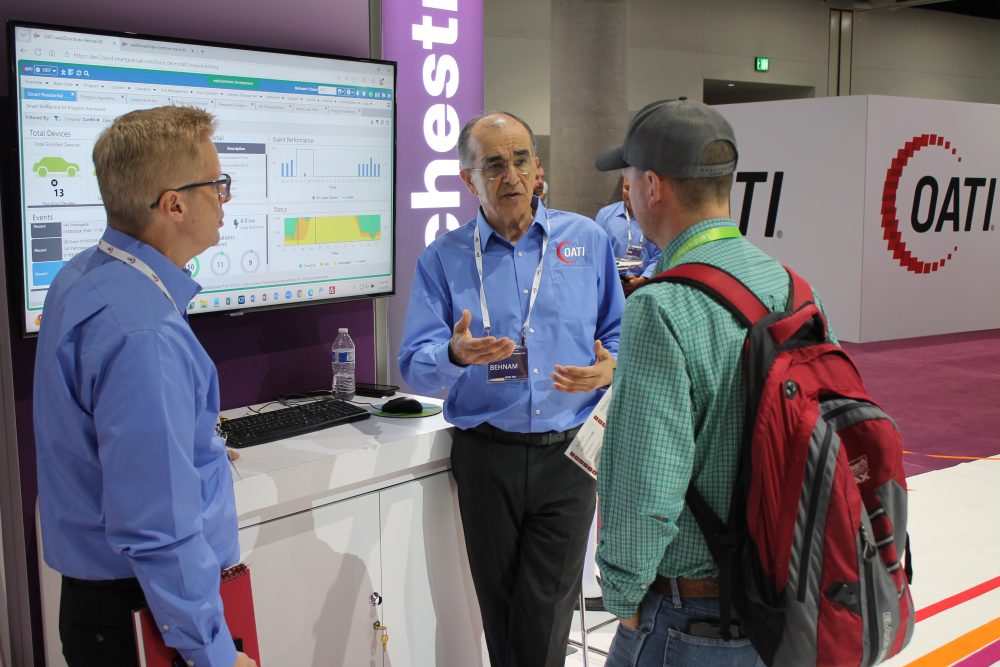
Utility DERMS in action
Utility leaders face a pivotal moment: balancing grid reliability, distributed resource integration, and modernization. But finding proven, verifiable DERMS case studies can be challenging in a murky vendor pool.