Into the Future

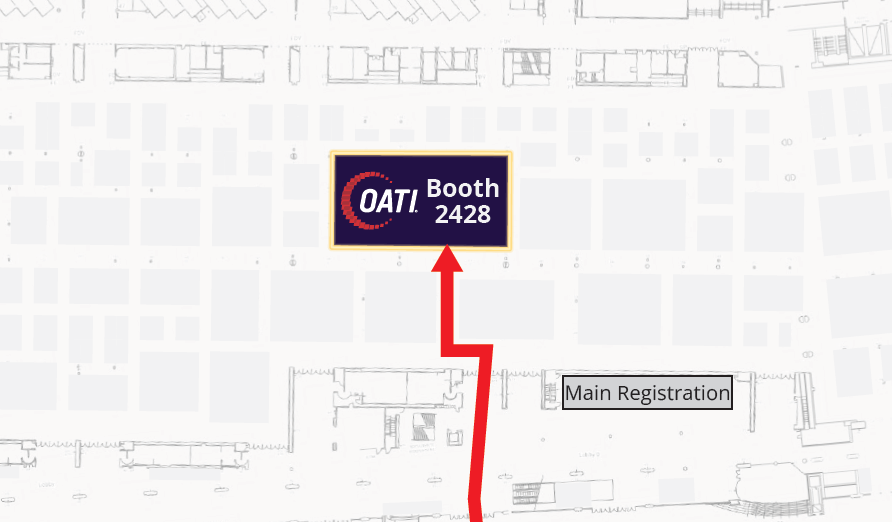
From AI-powered DERMS leadership to microgrid and asset control innovations, OATI is redefining how utilities manage the energy transition. Visit us at Booth 2428 in San Diego, Feb 2-7, 2026.

Why visit OATI at DTECH 2026?

At OATI, we’re unlocking dynamic utility operations and resilience. DTECH 2026 will be our biggest event yet. 

DERMS

The industry’s most deployed platform for managing distributed energy resources—from meters to markets.

Asset Controls

Advanced controls for resilience and flexibility, from microgrids to batteries to data centers.

AI

See OATI Genie™ — the energy industry’s first generative and agentic AI platform — in action.

Dive Into the Future with OATI experts on the next-generation of DERMS, AI, and asset controls in Booth 2428.

On top of showcasing industry-leading tools, we’re giving away a free car! All you have to do is visit three OATI demo stations and be in attendance for the announcement of the winner on Wednesday, Feb. 4 at 3 p.m. PT to qualify. If you’re unable to accept the prize, OATI will donate $20,000 to a charity of your choice.

Hear from our experts

The demands facing grid operators are changing swiftly: power thirsty AI data centers, clean (but variable) generation sources, and extreme weather events are testing the power grid like never before. These factors require a step change in situational awareness in order to maintain a safe, secure, and reliable grid for all.

Over the past few years, AI was pegged as the answer. Visionaries dreamed up ideas for how models would solve the grid most pressing challenges, yet market-ready applications have been limited to the low-hanging fruit: chat bots for customer engagement, forecasting of siloed data and other risk-averse use cases. Until now.

The California Independent System Operator has taken an industry-defining leap to bring real AI into power grid operations. With operators spending countless hours reviewing outage-related information, CAISO partnered with OATI to bring generative and agentic AI functionality to its outage management system. In this session, attendees will learn how CAISO and OATI worked together on use case identification, solution architecture, AI model selection and evaluation, and deployment in an operation environment.

This session is especially relevant to utilities and RTO/ISOs that are looking to operationalize AI solutions to gain improved situational awareness and efficiency. We will discuss lessons learned and share methodical approaches that should be taken to operate and comply with evolving regulations.

Key Takeaways

  • Uncover real-world, practical AI applications in power system operations
  • See the latest evolution of OATI Genie™, the first generative and agentic AI platform developed for the energy industry, which is being developed in collaboration with the California ISO
  • Learn how to improve situational awareness and efficiency with AI

Gopakumar Gopinathan

Power System Technology Senior Advisor

California ISO

Abhimanyu Thakur

Vice President – Platforms, Visualization & Analytics

OATI

Farrokh Rahimi

Executive Vice President Market Design & Consulting

OATI

As the industry embraces more distributed products, utilities are rethinking the operation and utilization of these solutions as they expand from the historic focus on building grid-edge capacity toward leveraging comprehensive flexibility. Advanced orchestration of DERs—across generation and transmission providers, distribution utilities, and end-use microgrids—demands new levels of coordination, shared visibility, and integrated data streams.

This session brings together OATI utility partners, including TVA and Oklahoma Gas & Electric, to explore the spectrum of approaches utilities are taking to get the most out of DERMS. Panelists will explore how dynamic DERMS capabilities are evolving beyond simple price-based dispatch toward systemwide situational awareness, multi-party operational alignment, and sophisticated control strategies that enhance reliability, flexibility, and customer participation.

Attendees will gain insight into lessons learned, emerging practices, and the collaborative approaches required across different stages of DERMS maturity to unlock the full value of distributed resources.

Key Takeaways

  • How utilities are progressing along the DERMS maturity curve, from foundational demand response and coordination programs to more dynamic, multi-layer grid orchestration.
  • What “shared visibility” means at different stages of DER integration and why high-fidelity data streams are becoming essential for both transmission and distribution operators.
  • Practical insights from TVA, OG&E, and other OATI partners on building the operational, organizational, and technical frameworks needed to support evolving DER strategies.
  • Strategies to maximize system flexibility while maintaining reliability across increasingly complex and decentralized grids.
  • Lessons learned from real deployments, including where the biggest value has emerged so far and how utilities anticipate DERMS capabilities will advance in the coming years.

Joseph Johnson

Sr. Consultant – Strategic Initiatives & Business Development

Tennessee Valley Authority

Ryan Jones

Grid Innovation Manager

Oklahoma Gas & Electric

Linda Stevens

Chief Strategy Officer — Smart Grid and Smart City

OATI

Microgrids offer unique pathways to resilience, new revenue streams, and sustainability. But every microgrid is unique, which means delivering reliable projects requires far more than acknowledgement of the asset’s merits. True complexity lies not in hardware installation—but in controls engineering, system orchestration, and multi-stakeholder alignment. This session brings together partners across the microgrid ecosystem to share how EPCs and utilities can successfully take projects from idea to operation.

Panelists will discuss the technical, operational, and organizational factors that drive successful microgrid deployment, including sequence-of-operations design, coordination with utilities, and the collaborative processes required to bridge expectations between owners, EPCs, and operators. Attendees will see firsthand how these partnerships accelerate time to deployment, reduce risk, and enable more resilient, flexible energy systems.

Key Takeaways:

  • Why controls engineering—not just hardware—determines microgrid performance, and how field-tested design and operational frameworks enable EPCs to deploy successful systems
  • How EPCs and utilities can streamline microgrid delivery through integrated engineering, sequencing, and commissioning workflows
  • Lessons learned from real deployments
  • How proper stakeholder alignment between utilities, EPCs, and technology partners reduces friction and shortens deployment timelines
  • The emerging trend: EPCs increasingly recognize the need for a dedicated controls partner, and how this partnership model accelerates market growth

Jeremy Chapman

Partner

Melink Solar Development

Austin Rogers

Director of Applications Engineering

RavenVolt

David Heim

Vice President Strategic Solutions, Chief Strategy Officer & Sr. Associate General Counsel

OATI

Grid edge and grid level Distributed Energy Resource Management Systems (DERMS) are important tools for utilities to manage DER assets and work with Advanced Distribution Management Systems (ADMS) to promote a more flexible and controllable grid. Such important tools require input from a variety of utility stakeholders, including operations, demand response, and product software.

This session will spotlight Evergy’s DERMS journey, which started in 2018, and now covers two states and four jurisdictions. We’ll discuss the current portfolio, which consists of over 200 MWs and includes business demand response, residential thermostats, and an electric battery pilot. Topics will include lessons learned from vendor cutovers, handling multiple DRMS programs, and preparing for future FERC 2222 marketplace aggregator participation. The importance of Evergy’s cross-department team will be highlighted as we discuss the planning and operations of Evergy’s DERMS. We’ll end by discussing Evergy’s next phase: pairing DERMS data with Evergy’s ADMS to showcase where DERs are located for better monitoring and the option to call location-specific events.

Christian Winingar

Distribution Modernization

Burns & McDonnell

Tianling Wu

Principal Engineer

Evergy

Andrea Carrillo

Senior Product Specialist

Evergy

Amy Bartak

Grid Modernization Manager

Burns & McDonnell

Shelly Barczak

Senior Manager

Exelon 

Across North America, tribes are advancing energy sovereignty through resilient microgrids, distributed energy resources, and long-term strategies that strengthen self-determination and local economic development. These projects also create opportunities—and challenges—for deeper collaboration with utilities as both parties work to enhance reliability, support grid stability, and navigate evolving regulatory and operational landscapes. 

This session brings together tribal energy leaders, utilities, and technology partners to explore what it takes to design, deploy, and sustain successful tribal microgrids. Speakers will discuss the importance of cultural alignment, community-driven priorities, sovereign decision-making, and technical planning for resilience. The conversation will highlight emerging models for utility engagement, coordination during design and interconnection, and long-term operational partnerships that respect tribal autonomy while strengthening the broader grid.

Attendees will gain practical insight into deployments already underway, lessons learned, and the pathways tribes are forging as they build sovereign, resilient, and future-ready energy systems.

Key Takeaways 

  • How tribes are using microgrids and DERs to advance energy sovereignty, resilience, and long-term community control over energy decisions.
  • Best practices for tribal–utility collaboration, from early planning and interconnection to ongoing operational engagement.
  • The technical foundations of resilient tribal microgrids, including controls architecture, sequencing, cybersecurity, and resource integration.
  • Regulatory and governance considerations unique to tribal nations, including sovereignty-driven priorities and partnership pathways.
  • Lessons learned from real tribal deployments, including aligning community goals, utility requirements, and technology capabilities for successful outcomes. 

Bob Blake

Executive Director

Native Sun

Tim Clashin

Account Executive

OATI

Lynn Siedschlag

Director of Engineering

Paskenta Band of Nomlaki Indians

Matthew Pleasants

Central Services Director

Colville Tribes

Jake Schueller

Development Executive

Woven Energy

Get ready for DTECH

DERMS Buyer’s Guide

Microgrid Controls Buyer’s Guide

Whitepaper: Scaling Battery Control

Whitepaper: DERMS in Action

Meet with OATI experts at DTECH

Get in Touch

Thank you for registering.

Please notify us in advance if you are not able to attend this training session so that we can accommodate those who are wait-listed.

IMPORTANT NOTICE: If you registered and did not attend 3 sessions, you will not be allowed to register for future training sessions. We understand that things can happen unexpectedly, in case you need to un-register for the training please notify Training@oati.net at least 2 days before the training.